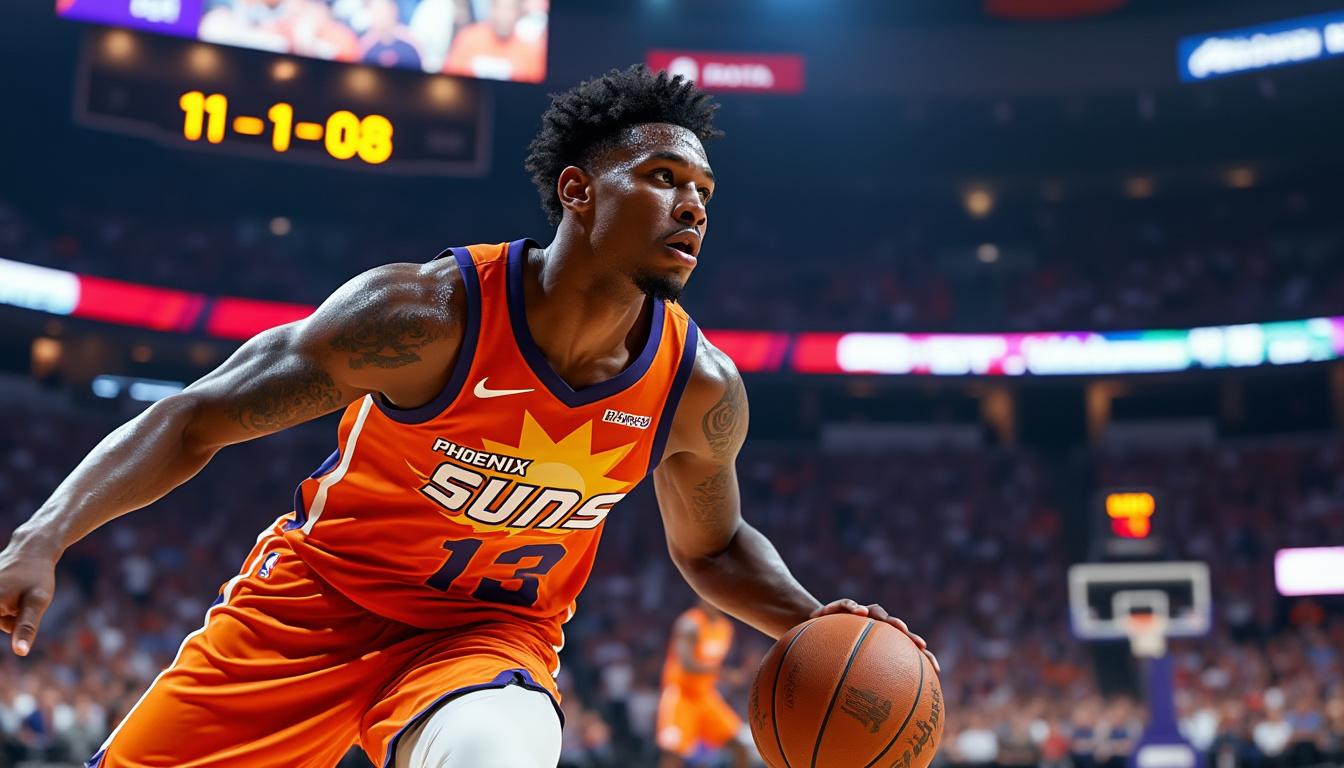
The Phoenix Suns have ignited excitement across the NBA with their scorching start to the 2025–26 season. Entering this campaign with a fully revamped roster and fresh leadership under first-time head coach Jordan Ott, the Suns have quickly shifted perceptions from hopeful hopefuls to formidable contenders. The transformation followed a whirlwind offseason headlined by a historic seven-team trade, reshaping Phoenix’s identity and fueling optimism despite projections labeling them as underdogs in the Western Conference. By late November 2025, their early success has sparked fervent discussions about team chemistry, playoff potential, and the possibility of reigniting the franchise’s championship aspirations.
Key to this energized performance has been the impact of new threats in the lineup, including electrifying guard Jalen Green, versatile wing Dillon Brooks, and promising young talents selected in the 2025 NBA Draft. Veteran presences also remain vital, bridging past efforts with this exciting new era. With analytical eyes on the depth chart and the unfolding basketball performance, fans and pundits alike are keen to understand how Phoenix’s hot start might translate into sustained results throughout the grinding demands of the NBA season.
The Suns’ pursuit of excellence reveals much about the complexities of roster construction, game strategy, and player development in today’s league. As they increasingly look like NBA contenders ready to make waves well into spring, this snapshot from late November serves as a fascinating window into the evolving narrative of a team hungry to reclaim its place among the elite.
Key takeaways in brief:
- Historic seven-team trade radically reshaped the Suns’ roster, acquiring promising players and multiple draft picks.
- New head coach Jordan Ott’s system is fostering rapid team chemistry and on-court cohesion.
- Despite modest preseason expectations, the Suns have stunned analysts with an 11-6 start by late November.
- Strong performances from key newcomers like Jalen Green and Dillon Brooks have injected energy and consistency.
- Rookie contributions, especially from first-round picks, underline the Suns’ commitment to blending youth with experience.
- The team’s offensive and defensive schemes are showing marked improvement, signaling true playoff potential.
- Fan enthusiasm is mounting, rejuvenating Phoenix’s standing as a Western Conference contender in 2025–26.
How Phoenix Suns’ revamped roster fuels their hot start as NBA contenders
The Phoenix Suns’ roster upheaval in the 2025 offseason stands out as one of the most significant realignments in recent NBA history. Central to this was an unprecedented seven-team trade that saw the departure of superstar Kevin Durant to the Houston Rockets. In exchange, Phoenix acquired a tantalizing package of young talent and future assets, including guard Jalen Green, forward Dillon Brooks, the 10th overall pick Khaman Maluach, plus five second-round selections. This aggressive strategy underscores the franchise’s intent to build a dynamic, balanced team capable of competing at a high level immediately while maintaining a strong core for future growth.
Joining these new faces are acquisitions like center Mark Williams from the Charlotte Hornets and free agents Jared Butler and Nigel Hayes-Davis, adding much-needed depth across positions. The combination of these components is shaping a roster that emphasizes versatility, speed, and defensive prowess present throughout their lineup.
Fresh strategic balance: starters and backups
The Suns’ depth chart reflects this blend of youth and experience:
| Position | Starter | Backups |
|---|---|---|
| Point Guard (PG) | Devin Booker | Jared Butler, Collin Gillespie |
| Shooting Guard (SG) | Jalen Green | Grayson Allen, Jordan Goodwin |
| Small Forward (SF) | Royce O’Neale | Ryan Dunn |
| Power Forward (PF) | Dillon Brooks | Nigel Hayes-Davis, Rasheer Fleming |
| Center (C) | Mark Williams | Nick Richards, Khaman Maluach, Oso Ighodaro |
Devin Booker remains a cornerstone, orchestrating offense with both poise and scoring aptitude. Jalen Green’s explosive athleticism and scoring ability provide a spark that has energized the Suns’ offense. Dillon Brooks imparts toughness at the forward spot, complementing the defensive-minded Royce O’Neale. Meanwhile, Mark Williams anchors the paint with rebounding and shot-blocking, epitomizing the Suns’ balanced approach to both ends of the floor.
This roster reconfiguration has been a key factor in the Suns’ unexpected early-season success, reversing initial predictions that pegged them as one of the Western Conference’s long shots. Their current standing and team chemistry evidence a squad discovering a winning formula quicker than many anticipated.
A strategic blend of veteran savvy and youthful exuberance
The Suns are demonstrating that smart roster construction combines star power with role players who buy into a collective vision. Veterans like Booker and Brooks provide leadership essential in navigating the season’s highs and lows, while younger players like Maluach and Fleming gain invaluable experience contributing meaningful minutes. This synergy is visible in the cohesion of their on-court performance — a sign of strong coaching and player buy-in under Jordan Ott’s leadership.
- Veterans stabilize and mentor, driving playoff-minded attitudes.
- Youth injects energy, innovation, and raw talent to stretch defenses.
- Depth allows for versatile lineups adjusting dynamically to opponents.
- Front office’s long-term vision woven into immediate team goals.
For further insight on the Suns’ roster transformation among the NBA’s top teams, readers can explore trade rumors and player movement in 2025, which highlight Phoenix’s bold maneuvers compared to league-wide trends.

Decoding team chemistry and early success in Phoenix Suns’ 2025–26 campaign
Team chemistry in basketball transcends individual talent; it entails communication, trust, and seamless collaboration, especially in rapid transitions that define NBA gameplay. The Phoenix Suns’ hot start is a testament to the effective melding of an eclectic mix of new and returning players, even under the scrutiny of fans and analysts watching every possession.
Key elements driving Phoenix’s team chemistry growth
The progress is especially impressive considering the varied backgrounds of new contributors. Factors propelling their chemistry include:
- Shared goals: A collective ambition to surprise the Western Conference has aligned individual efforts to a unified vision.
- Effective coaching communication: Jordan Ott’s fresh approach has established clear roles and accountability.
- Training camp integration: Early focus on building trust and understanding through drills and scrimmages.
- On-court adaptability: Players exhibit a willingness to adjust tactics dynamically, increasing on-the-fly synergy.
This rapid adjustment mitigates the typical sluggishness associated with integrating large roster changes. Newcomers such as Jalen Green and Mark Williams have assimilated quickly, while veterans bridge the gap and foster on-court harmony.
Evidence of basketball performance improvements linked to chemistry
Statistical upticks and visible effects include:
- Improved assist-to-turnover ratios, demonstrating unselfish play and discipline.
- Elevated defensive rotations and coordinated help defense schemes.
- Consistent execution in clutch moments, reflecting psychological resilience.
- Balanced scoring distribution preventing offensive predictability.
These metrics provide quantifiable proof that Phoenix’s hot start isn’t a fluke but rooted in tangible improvements that bode well for deeper playoff runs. It’s a welcome turn after years of “rebuilding” narratives, suggesting Phoenix’s revamped roster is clicking at just the right moment.
Fans eager for matchup previews can dive into detailed analysis of key games like the Suns vs Warriors, helping contextualize how chemistry translates to execution against top-tier competition.
Examining the Suns’ playoff potential amid intense Western Conference competition
Despite their hot start, the Suns inhabit one of the most challenging basketball ecosystems in the league: the Western Conference. In 2025–26, the depth and talent disparity across teams demands more than flashes of brilliance to secure playoff seeding and, ultimately, championship dreams.
Factors shaping Phoenix Suns’ playoff outlook
The Suns must navigate several variables on the path to postseason success:
- Consistency over a grueling 82-game schedule: Injury management and mental endurance will be critical.
- Adapting to powerhouses: Teams like the Golden State Warriors and Los Angeles Lakers remain formidable, requiring strategic game plans.
- Emerging rival teams: Rising squads with rising NBA stars pose unpredictable challenges.
- Playoff experience: The mixture of youthful ambition and veteran wisdom can provide clutch leadership.
Team readiness evaluation: strengths and areas for improvement
| Strengths | Areas to Improve |
|---|---|
| Dynamic offensive weapons with scoring diversity | Need enhanced rim protection consistency |
| Strong defensive rotations leading to fast breaks | Bench scoring depth remains uneven |
| Improved transition play capitalizing on speed | Experience handling playoff pressure underdeveloped |
| Healthy roster and low injury incidence so far | Maintaining consistent three-point shooting percentages |
These realities frame a Suns team that must maintain focus and build on their wins, avoiding the complacency that often hampers mid-tier teams thrust into contention. The infusion of fresh talent and strategy is boosting hopes, yet challenges endure.
Those tracking league trends can learn more from momentum shifts among NBA contenders, placing Phoenix’s 11-6 start into broad competitive context.
Impact of rookies and young talent on Phoenix Suns’ emerging contender status
Rookies and young players often shape the trajectory of an NBA team’s growth, and the Suns’ 2025 draft class is no exception. Khaman Maluach, Rasheer Fleming, and Koby Brea bring fresh energy and an eagerness to make an impact in meaningful minutes that bolster Phoenix’s depth and versatility.
Contributions and development trajectories
Early returns have shown these young players demonstrating:
- Adaptability: Quickly adjusting to NBA pace and physicality.
- Defensive hustle: Providing effort plays like blocks, steals, and contested shots.
- Offensive growth: Stretching the floor with shooting ability and handling responsibilities in rotation.
- Team integration: Showing commitment to the Suns’ culture and systems.
Such traits give the Suns not only short-term benefit but long-term assets critical to sustaining contender status over future seasons. Alongside seasoned stars, these rookies deepen Phoenix’s competitive profile.
The league’s standout newcomers of 2025 add further perspective on why investing in youth remains essential, with comprehensive reports available on rookie performances and projections.
| Rookie | Draft Position | Average Minutes/Game | Key Stats |
|---|---|---|---|
| Khaman Maluach | 10th overall | 18.5 | 8.2 points, 6.1 rebounds |
| Rasheer Fleming | 31st overall | 12.3 | 5.4 points, 3.3 rebounds |
| Koby Brea | 41st overall | 9.7 | 4.1 points, 2.5 rebounds |
Analysis of coaching influence and tactical innovations under Jordan Ott
Head coach Jordan Ott’s arrival marks a pivotal moment for the Suns. His first NBA head coaching role has seen him quickly gain respect through innovative tactics and player management approaches that have unlocked new strengths across the roster.
Ott’s coaching philosophy and system impact
Key hallmarks include:
- Emphasis on pace-and-space basketball: Leveraging shooters and versatile defenders to open lanes.
- Switch-heavy defense: Maximizing the versatility of players like Brooks and O’Neale.
- Data-driven adjustments: Timely lineup rotations and exploitation of analytics insights.
- Player empowerment: Encouraging autonomy while fostering accountability.
The result has been noticeable cohesion and adaptability, with the Suns capable of altering strategy mid-game against strong opponents. Ott’s leadership is widely credited with fostering a culture of resilience and hunger that fuels the team’s hot start this season.
From tactical overviews to player impact, deeper analyses of Phoenix’s game strategy can be found in previews such as the Warriors vs Suns matchup on November 19, exemplifying the evolving chess match that defines their campaign.
What were the most significant moves made by Phoenix Suns in the 2025 offseason?
The Suns executed a historic seven-team trade moving Kevin Durant to Houston in return for key players like Jalen Green, Dillon Brooks, multiple draft picks including Khaman Maluach, and added depth through signings such as Mark Williams, Jared Butler, and Nigel Hayes-Davis.
How has team chemistry contributed to the Suns’ hot start in the 2025–26 season?
Effective coaching, shared goals, and rapid integration of new players under Jordan Ott have created strong communication and trust. This cohesion translates into better assist ratios, defensive rotations, and clutch play.
What challenges do the Suns face in pursuing playoff success in 2025–26?
The Western Conference remains highly competitive with teams like the Warriors and Lakers. Challenges include sustaining consistency, managing injuries, improving bench scoring, and developing playoff experience.
Which rookies have made an impact for Phoenix Suns early in the season?
Khaman Maluach, Rasheer Fleming, and Koby Brea, taken in the 2025 draft, have contributed through adaptability, defense, and growing offensive roles, reinforcing the Suns’ depth and future outlook.
What impact has Jordan Ott had as the new head coach?
Ott has implemented a pace-and-space offensive system with switch-heavy defense and data-driven strategies, enabling quick adjustments and fostering a resilient team culture that underpins the Suns’ early victories.